Sometime in the next few years, the interesting question about AI coding agents will stop being "how smart is the model" and become "how many agents can run before a human has to notice." On October 31, 2026, DeepSeek's Harness team published its answer: dsh-superagent, an MIT-licensed research prototype that separates a coding agent into a Router that keeps context and Workers that execute tasks in parallel, and that acts without being asked.
The prototype, reported by Bloomberg and the South China Morning Post on November 1 and packaged by DeepSeek's own open-source Harness team, is aimed squarely at Claude Code, Anthropic's dominant coding agent. But the more interesting target is an assumption almost every team still operates on: that an agent works inside a session, waits for instructions, and stops when the developer looks away.
What DeepSeek actually released
dsh-superagent is built on dsh, DeepSeek's open-source agent harness, which was released on August 13, 2026 under the MIT license and gained more than 172,000 GitHub stars in its first week. The new prototype extends it with a two-layer architecture:
- The Router maintains the broader context of what a team is doing and handles communication. It watches, remembers, and delegates.
- The Workers execute separate coding tasks in parallel, each with its own session, coordinated by the Router rather than by a developer typing the next command.
DeepSeek described the design in a post on Weibo, and the details matter. An internal version can track a development issue from an instant-messaging conversation into GitHub, while also monitoring public developer discussions for new information. If someone reports a bug in a group chat, the agent can identify the issue, attempt to reproduce it, and submit a pull request if it finds a solution, without being explicitly tagged or summoned by any user.
The bottleneck argument
DeepSeek's stated thesis is the part worth taking seriously regardless of which vendor you back. Traditional coding agents largely operate within individual sessions: a developer gives an instruction, the agent works on it, then waits for the next command. DeepSeek argues this makes human attention, rather than model capability, the bottleneck when multiple tasks run at the same time.
That reframes a problem most teams have already felt. If one developer can effectively supervise one agent at a time, an agentic development team scales linearly with headcount, and the expensive AI is idle most of the time. If one Router can coordinate several Workers across the places work actually happens, group chats, issue trackers, repositories, the same human attention supervises a multiple of the output.
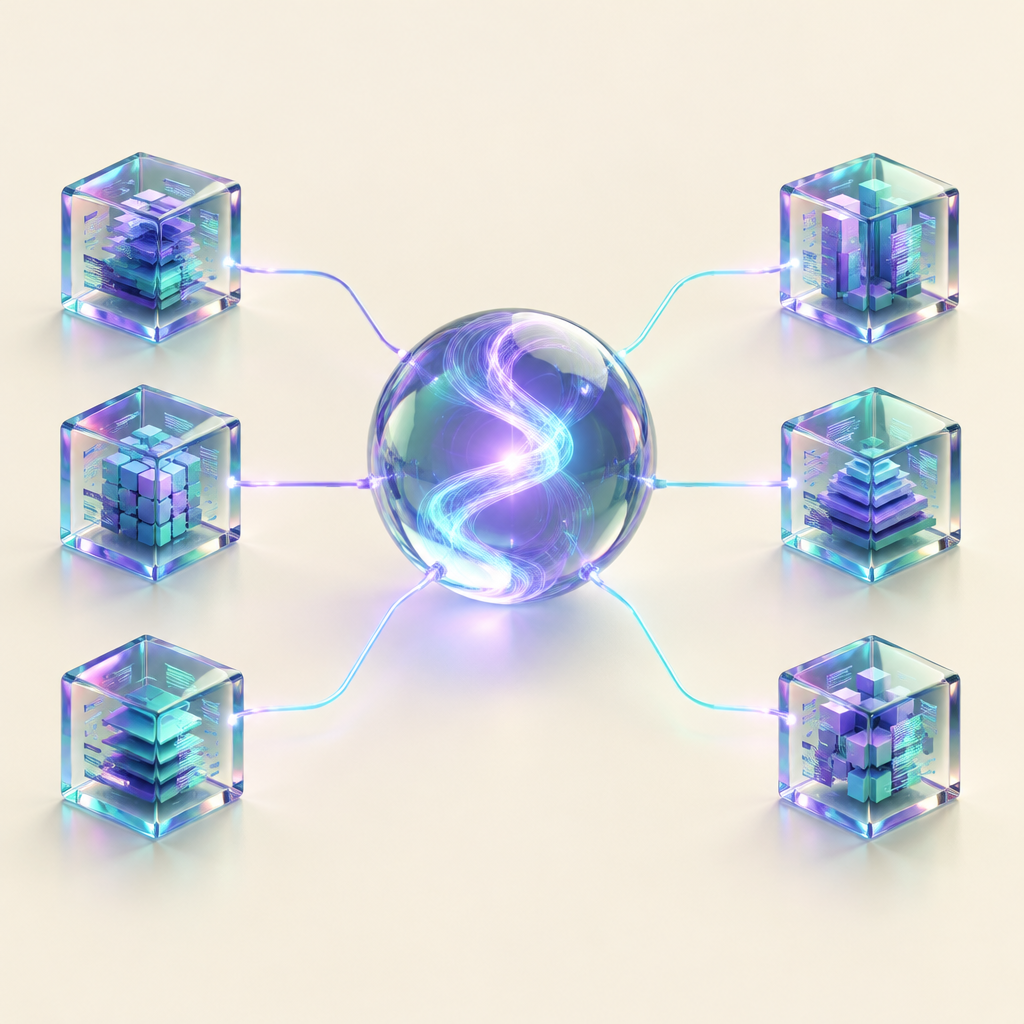
This is also the logical next step for the harness ecosystem dsh already built. When DeepSeek open-sourced dsh in August, the pitch was that everything is a plugin and the agent edits your workspace directly. A harness that runs anywhere wants a design that does not depend on one person watching one terminal. The Router-Worker split is that design, and the MIT license means any team can inspect, fork, or reject it.
The timing is not an accident
The launch lands weeks before Anthropic is expected to start its IPO roadshow, having filed its S-1 registration statement with the SEC in late October. Claude Code is a core part of Anthropic's commercial story, and DeepSeek's prototype attacks its central premise: that developers want a session-bound assistant they drive by prompt. Bloomberg's reporting framed the release as part of the coding race with OpenAI and Anthropic; the Weibo post says the quiet part out loud, that the difference is autonomy.
There is a market-sentiment angle too. The Financial Times reported on October 30 that OpenAI has cut its funding target by $10 billion to $20 billion at a $1.25 trillion valuation, and Blackstone suggested Anthropic may not secure an investment-grade rating immediately after going public. An open-source challenger shipping a credible autonomy prototype into that window is a reminder that the coding-agent category is not settled.
What we would take from it, and what we would not
Three things look durable here, one does not.
Durable: the Router-Worker pattern itself. Any team running multiple agents, coding or otherwise, can adopt the separation today: one process that holds context and decides what to delegate, many processes that execute without sharing a single conversation window. It is a pattern we use when designing automation, and DeepSeek's prototype is a useful reference implementation.
Durable: channels as inputs. Work requests arrive in group chats, email, and issue trackers long before they arrive as prompts. Agents that can only see a terminal are deaf to most of the organization.
Durable: the pull-request as the unit of trust. DeepSeek's proactive bug fixing ends in a pull request, not a direct commit. Autonomy stays reviewable because the output lands in the same human gate as any other contribution.
Not yet durable: the capability claims. This is a research prototype, the impressive behaviors are described by the vendor, and nobody outside DeepSeek has production numbers. Treat it as a design argument, not a procurement decision.
The practical read for teams
If your team runs agents today, the checklist version of the lesson is short. Stop treating each agent as a chat window and start treating agent work as a queue with a coordinator. Give agents real channels to listen to, and insist that everything they do ends somewhere a human can review it. Then measure the thing DeepSeek says is scarce: how much of your team's attention each running agent consumes per unit of work.
The model layer will keep improving on someone else's budget. The design layer, who coordinates what, and how much attention it costs, is where teams actually have a decision to make this year. If you want help designing agent workflows that don't require a human babysitter, that's work we do. Start at The Vivid Company.
Read next
- Google says AI search queries now run 3x longer. Here's what advertisers should actually do
- Google AI Mode ads just went global: Canada is on the list, and here's the checklist
- How CPA firms are putting AI to work in audits
- GitLab Orbit is here: the context graph that makes AI agents hallucinate less